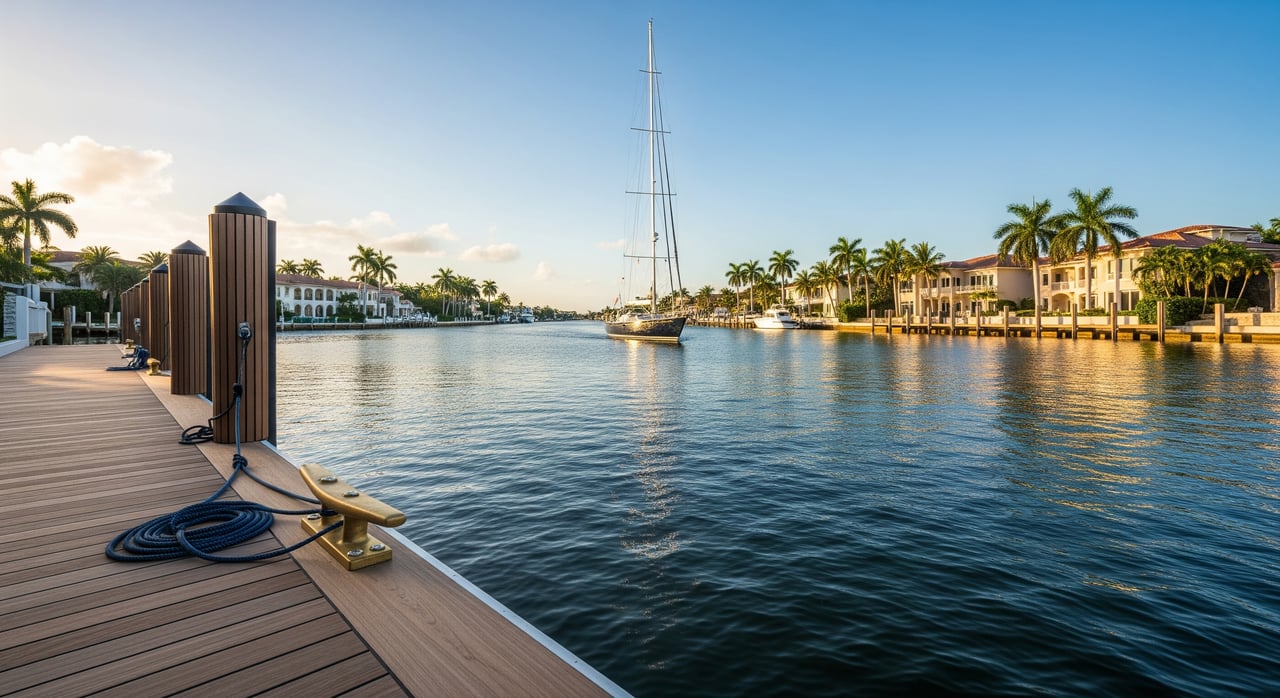
If you are shopping for a waterfront home in Fort Lauderdale, you will see the phrase “no fixed bridges” again and again. It sounds simple, but it carries real meaning for your yacht, your day-to-day boating, and your resale potential. You want clarity before you commit, especially if you own or plan to own a tall vessel.
In this guide, you will learn exactly what “no fixed bridges” means here, how it affects ocean access, what to verify at a property, and how it influences value. You will also get a practical checklist to use on tours. Let’s dive in.
What “no fixed bridges” means
In real estate and boating, “no fixed bridges” means there are no low, immovable bridges between a property’s dock and the open ocean that would block your vessel by height. It addresses your vessel’s air draft, the height from the waterline to the highest fixed point like a mast, radar, or hardtop.
In Fort Lauderdale, that route usually involves a residential canal, the Intracoastal Waterway, and Port Everglades Inlet to the Atlantic. If the path has no fixed bridges, a tall vessel can pass without lowering gear or de-stepping a mast. Movable bridges may still be present elsewhere, but they open to allow passage and are not considered fixed obstructions.
It is important to remember that “no fixed bridges” does not mean “no restrictions.” Depth, canal width, speed zones, and bridge opening schedules still shape how and when you transit.
How it affects your boating
Vertical clearance: air draft
For larger motor yachts, sport yachts with hardtops, and sailboats, air draft is often the make-or-break factor. “No fixed bridges” signals that low, immovable bridges will not block you by height on the route to the inlet. You avoid having to dismantle equipment or choose alternate mooring.
You should still check for other overhead obstructions near the property. Private footbridges, low-hanging trees, or overhead lines can create local limits even if the larger route is bridge-free.
Depth and draft
Air draft is only half the equation. Your vessel’s draft, the depth below the waterline, must match the canal and dock depths along your route. Residential canal depths in Fort Lauderdale vary. Some are maintained and dredged for larger yachts, while others are shallower due to shoaling or limited maintenance.
Ask for a recent sounding or survey and confirm the depth at the dock at low tide. When a listing says “deep water,” look for a number in feet and the exact spot where it was measured. Southeast Florida tides are modest, but an extra foot can matter if your draft is close to the bottom.
Transit time to Port Everglades
Ocean access time is often marketed as a short range, like 5 to 20 minutes, but the reality depends on several variables. Your exact canal location, speed and no-wake zones, whether movable bridges sit along your route, and typical congestion on the Intracoastal all play a role.
Sea state and commercial traffic near Port Everglades can also affect timing. If you are evaluating a property for frequent ocean runs, do a test route with a local captain to see a true door-to-ocean timeline under typical conditions.
Operations and rules
Movable bridges operate on schedules or on demand, and that can introduce short waits. Speed and idle zones are common in municipal waterways and will cap your speed. Follow marked channels, since not every part of a canal is dredged to the same depth.
Approaches to Port Everglades include operational and security rules. Be aware of restricted areas and the presence of commercial vessels. Small pleasure craft must give way and follow all markers and posted guidance.
Fort Lauderdale canal realities
Common canal types
- Direct canal to Intracoastal: Homes that back onto canals which feed directly to the Intracoastal usually provide the cleanest, simplest access for larger yachts.
- Canals with turning basins: Bigger vessels need room to swing and dock. A canal with a proper basin or cul-de-sac can make maneuvering easier.
- Cul-de-sac or dead-end canals: These can be narrow and limit turning. Verify that your length overall can comfortably enter, dock, and depart.
- Canals near municipal structures: Pedestrian bridges, culverts, or specific seawalls can reduce practical clearance or maneuvering space at certain points.
Maintenance and dredging
Some canals are maintained by Broward County, the City of Fort Lauderdale, or an HOA, while others are not. Dredging schedules and budgets can change over time. If your vessel’s draft is near the depth limit, you will want to know who maintains the canal and when it was last dredged.
Dock and seawall factors
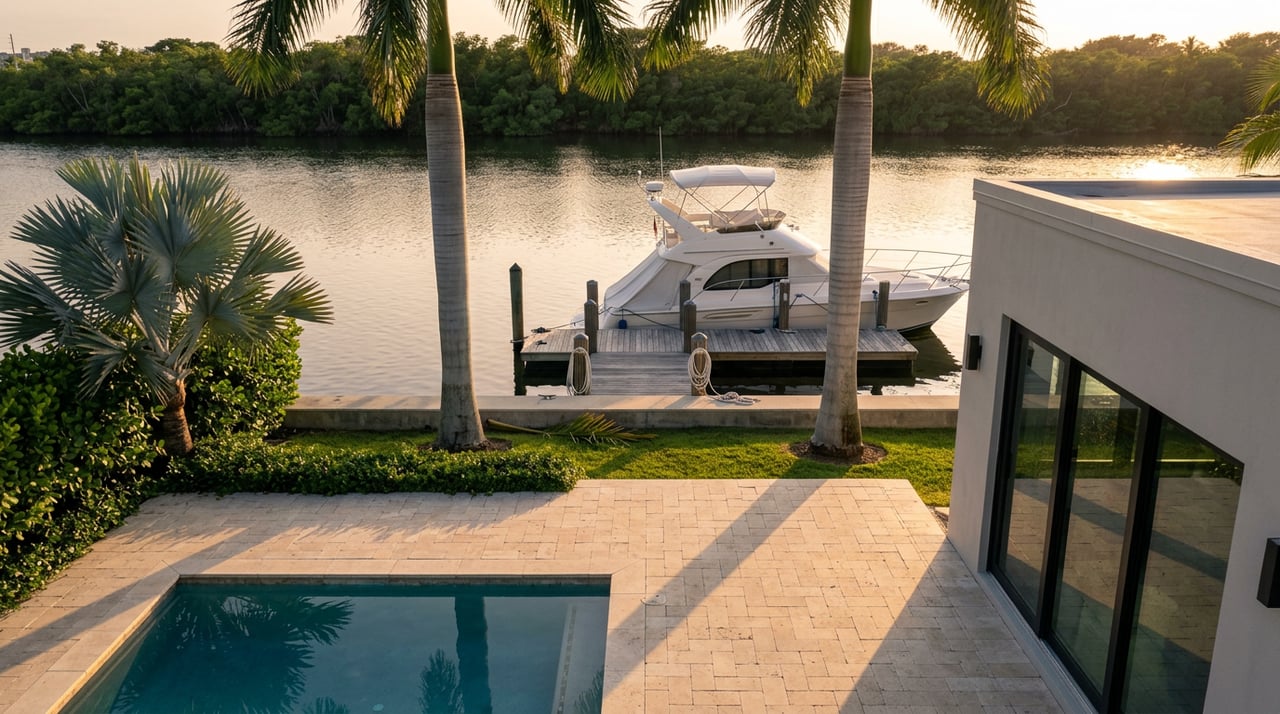
Look beyond the canal itself. Dock length and configuration, pile spacing, and the condition of cleats and utilities all affect usability. Bulkhead and seawall condition matters for longevity and insurance. Seawall elevation and storm protection can influence resilience and maintenance planning.
Market impact and resale
Buyer pool and value
Properties with truly bridge-free access typically appeal to a high-value segment of buyers who own larger motor yachts or sailboats. That demand can support pricing, but the premium depends on specifics such as dock length, usable depth, and the home’s overall quality.
There is no guaranteed bump in price just for the label. Bridge-free status is one driver among several that include neighborhood appeal, condition, and hurricane protection measures.
How to search and filter
When you search, look for specific fields and notes in the listing that move beyond marketing language. Helpful fields include:
- Water access type: direct ocean access, via Intracoastal, or access with bridge restrictions.
- Bridge information: “no fixed bridges,” “vertical clearance,” and “bridge-free to ocean.”
- Dockage details: maximum boat length at the dock, number of slips, depth at the dock in feet, and whether the dock is fixed or floating.
- Depth descriptors: if you see “deep water,” you should also see a number and where it was measured.
Because MLS fields vary, ask the agent for numerical values and a clear route description instead of relying on generic terms.
How sellers should document the claim
If you plan to sell, strong documentation supports your price and helps buyers move quickly. Helpful items include numerical depth at the dock at mean low water, measured vertical clearance, GPS distance and estimated time to Port Everglades with assumptions, the canal maintenance entity and last dredge date, and clear photos or diagrams of the dock, pilings, and approach.
Your property evaluation checklist
Use this list when touring and reviewing disclosures:
- Confirm the claim:
- Ask for measured vertical clearance along the route and any nearby obstructions such as private bridges, lines, or trees.
- Request a recent dock and canal sounding that shows depth at low tide and where the measurement was taken.
- Measure vessel compatibility:
- Compare your vessel’s air draft and overall length to reported clearances and dock length.
- Compare your vessel’s draft to depth at the dock at low tide and ask about dredging history.
- Maneuvering and space:
- Inspect canal width, look for turning basins, and consider neighbors’ docks and pilings.
- Check the dock hardware and pilings for load capacity suited to your vessel.
- Operational considerations:
- Ask about speed and no-wake zones, typical congestion, and any movable bridges on common routes.
- Review local ordinances or HOA rules on mooring, engine idling, and repairs.
- Documentation and permits:
- Verify dock and seawall permits and recent repairs.
- Confirm who maintains the canal and the last dredge date or upcoming plan.
Trusted resources to consult
For independent verification and planning, consider these authoritative sources:
- NOAA nautical charts and electronic navigational charts for depths, obstructions, and aids to navigation.
- U.S. Coast Guard Local Notices to Mariners and bridge operation rules for openings and schedules.
- Port Everglades Harbor Department for inlet approach guidance and commercial traffic advisories.
- Broward County and City of Fort Lauderdale waterways or public works for canal maintenance responsibility and dredging records.
- Local marine surveyors, professional captains, marinas, and boatyards for practical on-the-water assessments.
- BoatUS and Florida Fish and Wildlife Conservation Commission for boating safety and statewide regulations.
The bottom line for buyers
In Fort Lauderdale, “no fixed bridges” is a valuable shorthand for ocean access by height, but it is not the full picture. To protect your investment, verify air draft, depth, maneuvering room, and the operational realities of your route to Port Everglades.
When you want deep local knowledge, discreet guidance, and the right connections on the water, connect with The Simpkin Team. Our waterfront experience, premium marketing, and white-glove representation help you buy with confidence.
FAQs
What does “no fixed bridges” mean for Fort Lauderdale buyers?
- It means the route from the property’s dock to the ocean has no low, immovable bridges that would block a tall vessel by height, but you still must confirm depth and operations.
How do air draft and draft differ for a yacht purchase?
- Air draft is height above the waterline and determines if you can clear bridges, while draft is the depth below the waterline and determines if you can float and transit the canal.
How long does it take to reach Port Everglades from a canal home?
- Typical ranges are often marketed as 5 to 20 minutes, but actual time depends on canal location, speed and no-wake zones, movable bridges, traffic, and sea state.
Are movable bridges a problem if there are no fixed bridges?
- Movable bridges are not height barriers because they open, but they can add short waits depending on schedule and traffic, which affects your transit time.
What depth should I verify at a Fort Lauderdale dock?
- Ask for numerical depth in feet at low tide at the exact measurement location, then compare it to your vessel’s draft and consider recent dredging or shoaling.
Does “no fixed bridges” guarantee a higher resale price?
- It can expand demand among yacht owners and support value, but pricing still depends on usable dockage, home quality, neighborhood factors, and overall market conditions.